How Companies Detect AI Cheating in Job Interviews in 2026
38.5% of candidates now trigger AI detection flags in interviews. Here's exactly how employers catch it — and what actually works instead.
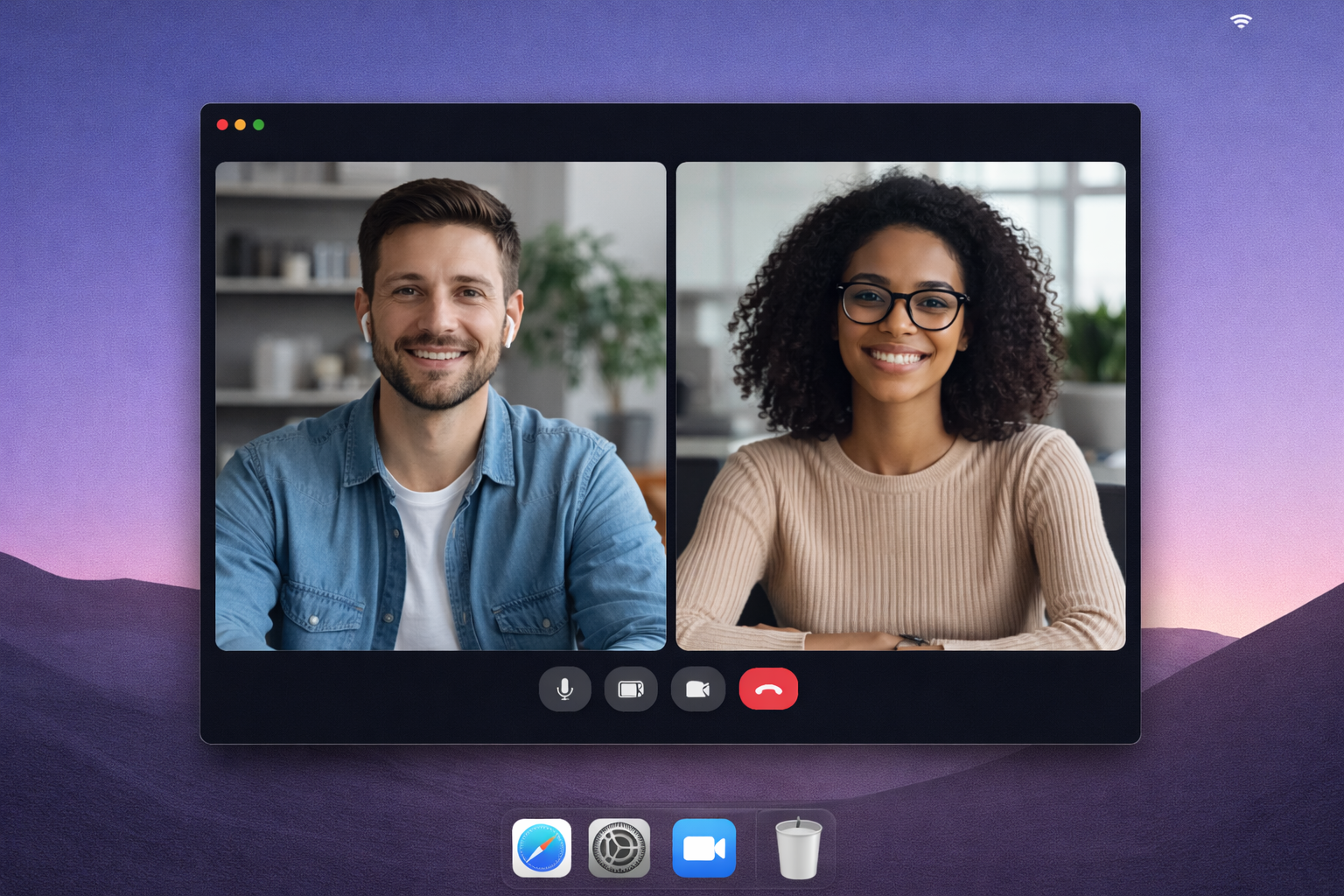
How Companies Detect AI Cheating in Job Interviews in 2026
Fabric HQ analyzed 19,368 interviews conducted between July 2025 and January 2026 and found that 38.5 percent of all candidates showed behavioral signals consistent with AI assistance. For technical roles, the figure hit 48 percent. Cheating adoption more than doubled over that same six-month window — from 15 percent of candidates in June 2025 to 35 percent by December.
Employers noticed. And they built detection to match.
If you're thinking about using an AI tool in your next interview, the question isn't whether you'll get away with it. The better question is whether the approach you're taking is one you'd be comfortable describing to the interviewer. The answer to that question tells you more about the risk than any detection rate does.
Here's how employer-side detection actually works — and what it means for how you should approach this.
What Detection Actually Looks Like
The instinctive assumption is that companies look for the AI overlay itself — a watermark, a network trace, something visible on the screen. That's not usually how it works.
Fabric HQ's detection system analyzes more than 20 behavioral signals during a live interview. None of them require catching the tool in the act. Instead, they build a probability score from patterns that diverge from natural human recall:
Gaze direction. When a person recalls something from memory, their eyes move in patterns consistent with internal retrieval — typically up and to the side. When they're reading from an off-screen source, the pattern shifts: eyes move slightly left and down in a consistent rhythm that doesn't match organic memory access. Enough of this, and the score moves.
Response latency with specific structure. Human answers to complex questions have a recognizable rhythm: a brief pause while the person gathers their thought, then a loosely structured response. AI-assisted answers tend to arrive after a longer initial pause — while the candidate waits for the suggestion — followed by an unusually well-structured, complete answer delivered without the false starts and self-corrections that characterize genuine recall.
Language complexity shifts. Most candidates have a consistent register in how they speak. Their vocabulary, sentence length, and structural complexity stay roughly stable across questions. AI-assisted answers tend to be denser, more formal, and more complete than the surrounding conversation — and the shift is often detectable across the arc of an interview.
Micro-pauses at reading breaks. People who are reading generated text tend to pause mid-sentence at points that don't correspond to natural breath or thought breaks. The pause happens at line transitions, not at the logical inflection points in the idea.
These signals don't individually prove anything. Combined across a long interview, and compared against a baseline built from tens of thousands of sessions, they produce a detection score that platforms like Fabric, Sherlock, Talview, and Phenom now sell to enterprise hiring teams.
The 61 percent figure from the Fabric data is worth sitting with: 61 percent of candidates flagged for AI assistance still scored above passing thresholds. Most cheating is currently working, in the narrow sense that it gets candidates through the screen. But "passing the interview" and "performing in the job" are different outcomes — and the problem with AI that generates experience you don't have is that it creates a gap you'll close the hard way, once hired.
How Companies Are Changing the Environment
Detection analytics are one response. Changing the interview format is another — and it's the more durable one.
Amazon has formally banned AI tools during interviews and requires candidates to acknowledge the policy explicitly. "To ensure a fair and transparent recruitment process, please do not use GenAI tools during your interview unless explicitly permitted." Violations can result in disqualification.
Google announced in June that it is reintroducing in-person rounds across its hiring process. CEO Sundar Pichai confirmed the move: "at least one round of in-person interviews for people." You cannot run a screen overlay when you're sitting across a table.
McKinsey started requiring at least one in-person meeting with candidates before extending offers roughly 18 months ago. The policy predates the current detection wave — the firm read where this was going early.
Goldman Sachs bans AI in interviews. Meta takes the opposite position, explicitly allowing it. Policies vary enough that you need to check the specific company's position before assuming anything.
The in-person pivot is significant because it closes the gap that remote video interviews left open. A desktop overlay can be made invisible to screen sharing at the OS level — that's a solved engineering problem. It cannot be made invisible to a person sitting three feet away from you who can see where your eyes are going.
Companies moving toward work-sample assessments and portfolio-based evaluation are doing the same thing for a different reason: if the assessment is "show us something you built," AI assistance in the moment is less relevant than whether you can build the thing at all.
The Cluely Example Is Worth Understanding
Cluely built its brand around the explicit claim that it could help candidates "cheat on everything" — a marketing position provocative enough to generate a funding round. In June 2025, Andreessen Horowitz led a $15 million Series A into the company. The founders, Roy Lee and Neel Shanmugam, had been suspended from Columbia University for building an earlier version of the tool.
In March 2026, Lee admitted publicly that the $7 million in annual recurring revenue he had cited to TechCrunch the previous summer was not accurate. The real figure was approximately $5.2 million. The admission was reported by TechCrunch, Inc., and Yahoo Finance, and Lee described it as "the only blatantly dishonest thing I've said publicly online."
The specific ARR discrepancy isn't the point. The pattern is: a company that built its identity around helping users misrepresent themselves turned out to have been misrepresenting itself. That's not a coincidence — it's a culture signal. When a product's core pitch is "be undetectable while deceiving the people across the table from you," the standards that apply to other claims start to drift.
If you're evaluating tools in this category, the company's ethics and data handling are not peripheral considerations. The data these tools collect — audio of live job interviews, transcripts, screenshots — is among the most sensitive professional data a person generates. The company holding it matters.
Why "Undetectable" Is the Wrong Goal
Detection avoidance only matters if what you're doing is worth hiding.
Most of the fear candidates feel about AI detection is actually fear of a different thing: being caught misrepresenting capability they don't have. The detection isn't the problem — the misrepresentation is. If you're using AI to appear competent in areas where you're genuinely not, detection is the least of your concerns. The bigger problem is what happens when you're hired.
The candidates who get the most value from real-time AI assistance are the ones who don't need it to fabricate anything. They have the experience; they struggle to retrieve and articulate it under pressure. The interview isn't testing whether they know the material — it's testing whether they can perform under conditions of artificial stress. AI that helps with performance rather than substance is doing something categorically different from AI that generates capability from scratch.
The distinction matters in detection terms too. Behavioral analysis looks for signals that don't match the candidate's profile — language that's too dense, answers that are too complete, pauses that don't fit the question. Candidates surfacing their own prepared material tend to produce outputs that are consistent with how they communicate elsewhere in the conversation. The gap that behavioral detection exploits is the gap between the candidate's real register and the AI's output. If the AI is working with your actual material, that gap shrinks considerably.
What Actually Works
The approach that holds up under both detection and the job itself is the one where the AI is working with your real context.
Before an interview, load everything: the job description, the company's recent news, your specific examples from past roles, the questions you're likely to face and the honest answers you'd give them. Build a briefing document that contains your actual material, organized for recall.
During the interview, what you want from an AI tool is help surfacing what you loaded — not generating what you didn't. If you blanked on how to describe a project from three years ago, the AI should be able to surface the note you wrote about it, not invent a project you never did. If a question asks about handling conflict, it should prompt you with the example you prepared, not write a generic answer.
After the interview, AI is straightforwardly useful: review the transcript, identify what you missed, close gaps before the next round.
Meeting Copilot's interview assistant is built around this sequence. You connect your calendar, and the tool prepares a briefing pack before each scheduled interview — your resume, the job description, attendee context, talking points you've loaded. During the session, what the overlay surfaces is your material: your actual experience, organized for retrieval under pressure. After the call, the transcript and summary let you debrief what came up.
This isn't because the ethical framing is marketing — it's because suggestions built from your own background survive follow-up questions. Generated ones frequently don't. When an interviewer asks "tell me more about that" on an answer you didn't actually give, the session breaks down in a way that behavioral signals alone won't tell you about.
The Practical Read on Where This Is Going
The current state is a detection arms race, and the tools on both sides will continue to improve. Behavioral detection will get better. Evasion tools will get more sophisticated. Companies will continue moving high-stakes rounds to in-person formats for senior roles. Detection analytics will become a standard feature of enterprise video interview platforms the way spam filters became a standard feature of email.
What won't change: the job you're being hired into. Detection can be fooled. The role can't. A candidate who passes an engineering interview via AI assistance and cannot do the engineering work will surface that gap within weeks. The short-term win is a medium-term loss, and the medium term arrives faster than it used to in a market where teams are smaller and performance is more legible.
The candidates who get durable value from AI in their job search are the ones using it to compete more effectively on the basis of what they actually have — faster prep, better organization, sharper recall under pressure. That's a real edge. It doesn't require hiding from anyone.
Sources: Fabric HQ: State of AI Interview Cheating in 2026 · Entrepreneur: Google and McKinsey bring back in-person interviews · IT Pro: Amazon bans AI tools in job interviews · TechCrunch: Cluely CEO admits lying about revenue