How to Ace a Skills-Based Interview in 2026
70% of employers now use skills-based hiring. Here's what they're actually testing, what formats to expect, and how to perform under live pressure.
How to Ace a Skills-Based Interview in 2026
According to NACE's Job Outlook 2026 survey, 70 percent of employers now use skills-based hiring — up from 65 percent the year before. Ninety percent of those employers apply it specifically at the interview stage, not just during resume screening. It's no longer a progressive HR experiment at a handful of tech companies. It's the hiring default.
What this means in practice: the interview you're walking into this year looks different from the one you prepared for in 2022. Employers are less interested in where you went to school or what titles you've held, and more interested in whether you can demonstrate relevant ability — live, in the room or on the call.
That shift changes what preparation looks like. It also changes where candidates actually fail.
What Skills-Based Hiring Actually Changed
Traditional interviews relied heavily on credentialing proxies. A degree from a certain school, a job title at a recognizable company, a certain number of years in role — these served as heuristics for capability. The interview itself was largely a narrative exercise: tell me about your experience, walk me through your career.
Skills-based hiring replaces heuristics with direct evidence. Employers want to see you do something — or at least describe how you did something specific — rather than confirm that you have the right background to do something.
In practice, this means two things:
Behavioral questions got much more specific. A traditional behavioral question asks you to "tell me about a time you led a project." A skills-based version asks you to "walk me through a time you had to realign a project that was behind scope — what was the problem, what options did you consider, and how did you decide?" The first accepts a story about leadership. The second is trying to surface actual decision-making under constraint.
Live formats increased. The NACE Job Outlook 2026 data shows that 87 percent of employers use behavioral interviews as their primary skills-assessment method. But many roles now add a second layer: live work samples, role-plays, or case studies where you produce something or simulate a real task. These are harder to fake with rehearsed talking points.
The Four Formats You'll Actually Face
1. Behavioral interviews (still dominant)
The format hasn't changed, but the specificity has. Every major behavioral question in a skills-based process is designed to test a defined competency: problem-solving, communication under pressure, cross-functional influence, handling ambiguity.
Employers are looking for granular detail — specific numbers, named decisions, real trade-offs — not a polished narrative arc. An interviewer running a structured behavioral process will often push: "What were the other options you considered?" or "What would you do differently?" These follow-ups are intentional. They're testing whether your answer reflects real experience or a practiced performance.
2. Work samples and take-home exercises
More employers now ask candidates to produce actual work before or during the interview. A content role might involve a 30-minute writing prompt. A PM role might ask you to write a one-page prioritization brief. A sales role might involve a live pitch or a cold email they can read.
This format is expanding because it's hard to simulate with generic prep, and it reveals how someone actually structures thinking — not how well they've memorized a framework.
3. Live simulations and role-plays
Common in sales, customer success, and management hiring. You're handed a scenario — a difficult customer call, a negotiation, a performance conversation — and asked to handle it live. The interviewer plays the other party.
This is deliberately high-pressure. Candidates who've only prepped in low-stakes environments often stall in the first 15 seconds. The ones who do well have practiced actually talking through scenarios out loud, not just thinking through them.
4. Technical and skills assessments
For engineering and data roles, live coding problems and case-based technical questions remain standard. A Karat survey of engineering leaders found that 71 percent say AI has made technical skills harder to assess via take-home challenges — which is partly why live formats are expanding.
The assessment platform matters less than the ability to reason out loud, show your work, and communicate your approach clearly while doing the problem.
Where Candidates Are Actually Failing
The skills-based shift has exposed a preparation gap that wasn't as visible before.
Over-polished narratives, under-developed details. Candidates who've done extensive prep often have smooth answers to common questions. But smooth, polished answers to behavioral questions without real detail tend to fail in skills-based interviews — because the process is specifically designed to probe beyond the rehearsed version. When an interviewer asks the follow-up ("What did you actually say to the stakeholder?"), candidates who constructed a narrative hit a wall. Candidates who lived it can keep going.
Shallow STAR execution. The STAR method — Situation, Task, Action, Result — is still the right framework, but candidates frequently shortchange the A. They describe what happened and what the outcome was, and gloss over the specific actions they took. The "Action" is where skills-based interviews look. If the action is vague ("I brought the team together and we figured it out"), the interviewer learns nothing about competency. If it's specific ("I scheduled a two-hour working session, asked each person to bring their blockers ranked by impact, and we rebuilt the timeline from the most constrained dependency outward"), they're getting evidence.
Pressure errors during live formats. Work samples and role-plays trigger a different kind of anxiety than behavioral questions, because you're performing rather than narrating. Candidates who prep exclusively through note review and mental rehearsal often struggle to translate knowledge into fluent real-time performance when the stakes are real and someone's watching.
How to Prepare Specifically for This Process
Build a skills inventory before you prep. List the core competencies in the job description — usually five to eight explicit ones — and for each one, find two examples from your actual history where you demonstrated that skill. This is different from having general career stories. Each example needs to answer a specific competency question with enough detail that follow-ups don't knock you off your footing.
Drill the Action, not the Situation. When you practice behavioral answers, spend the most time on the Action section. After you tell your story once, go back and reconstruct exactly what you said, decided, or built. If you can't produce specific language and specific steps, the example isn't ready.
Practice the live formats you'll face. If the role involves client-facing work, do at least two mock role-plays with a real person. If it involves technical work, do the problems out loud on video, explaining your reasoning as you go. The research is consistent: mental prep doesn't train the same cognitive pathways as actually performing under simulated pressure.
Know the competencies, not just the questions. Skills-based interviews use structured rubrics. Each question maps to a competency. If you know what competency a question is testing, you know what the interviewer is actually writing on their scorecard — and you can make sure your answer addresses that directly, not just tells a good story.
Build a real briefing document. For each interview, create a one-page reference: the company's recent news, the specific role requirements, your strongest example for each listed competency, and three questions you want to ask. The goal isn't to read from it during the interview — it's to consolidate your preparation so you're drawing from a dense, organized mental model rather than reconstructing context under pressure.
The Real-Time Pressure Problem
Even candidates who've done this preparation correctly often run into the same failure point: the live interview surfaces a question they didn't anticipate, or a follow-up that takes their prepared answer in an unexpected direction, and they lose the thread.
This isn't a preparation failure — it's a retrieval-under-pressure problem. The information and experience are real, but the high-stakes environment scrambles access to them.
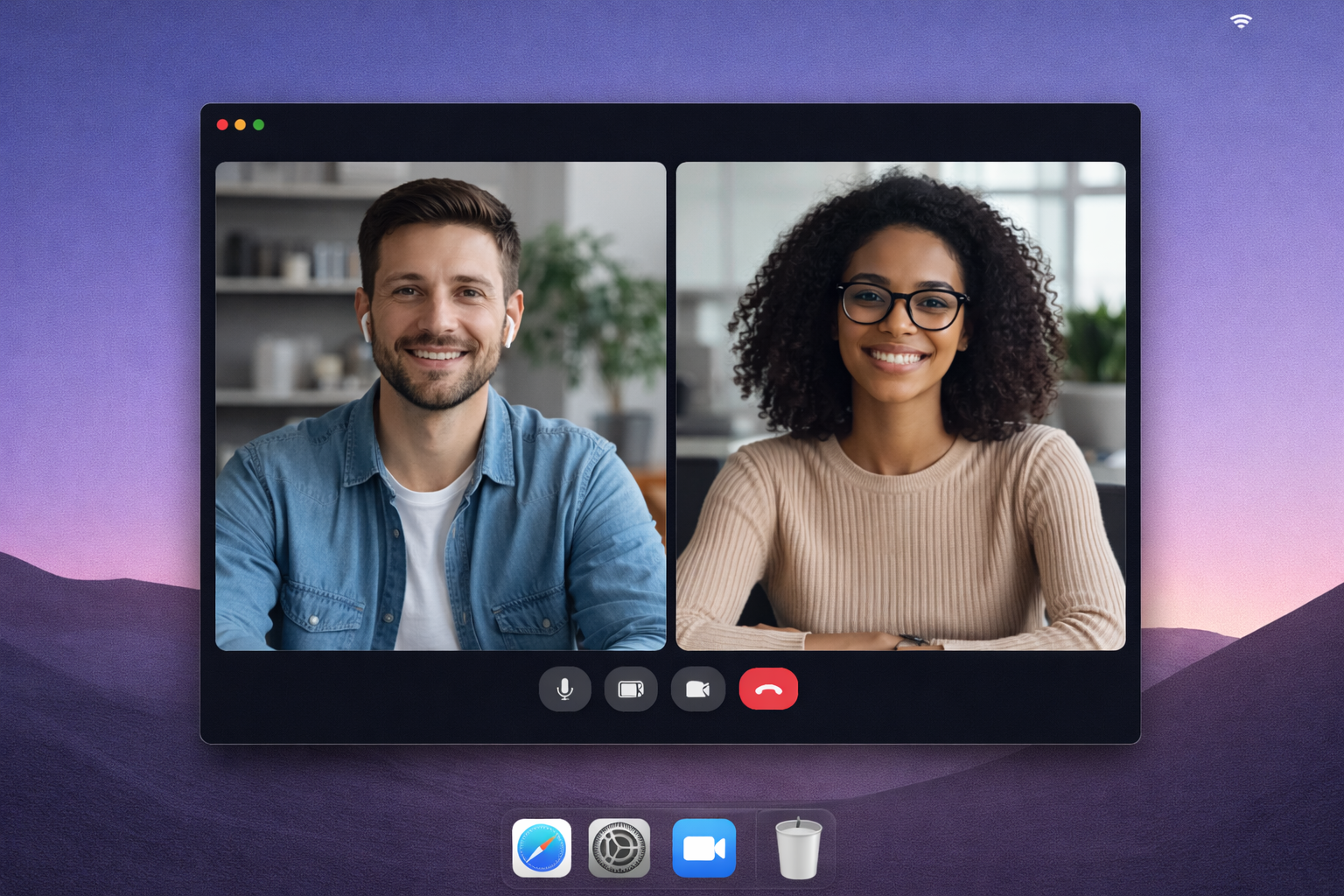
Meeting Copilot's interview assistant runs as an invisible desktop overlay during video calls. Before the interview, you load your resume, the job description, and your briefing notes. During the interview, if a question lands in a way you didn't prep for, you can surface a suggested response built from your actual background — your real experience, your prepared examples, your notes on the company. Not generated answers about things you haven't done, but your own context organized for recall when you need it.
No one else on the call can see it.
What the 70 Percent Shift Means for You
Skills-based hiring closing in on universal adoption isn't a trend to wait out. The candidate who gets the role in this environment isn't necessarily the one with the most impressive résumé — it's the one who can demonstrate relevant capability clearly, specifically, and fluently under the conditions of an actual interview.
That requires a different kind of prep than reading lists of "common interview questions." It requires building specific evidence for each competency, practicing the live formats you'll face, and having enough preparation organized behind you that pressure doesn't knock you off what you actually know.
The shift is good news for anyone willing to prepare properly. It rewards real capability over polished biography. The bar is higher in the room — but it's a bar most strong candidates can clear.